
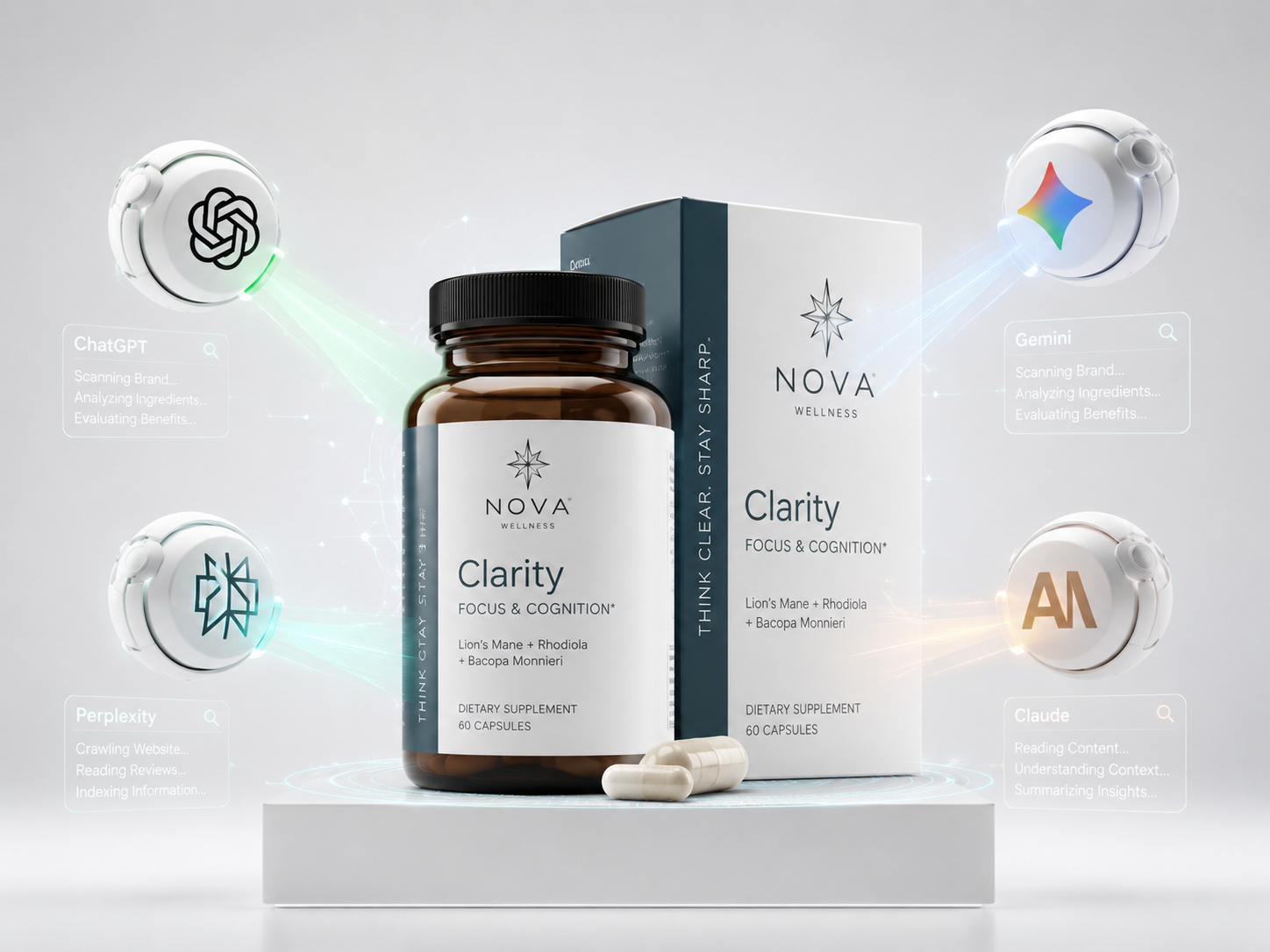
Answer Engine Optimization (AEO) is the practice of structuring your brand’s content so AI answer engines — ChatGPT, Perplexity, Google’s AI Overviews, and others — quote it directly when users ask a question. Where SEO optimizes for ranking on a results page, AEO optimizes for being the cited source inside a generated answer.
For DTC brands, this is no longer a fringe concern. A growing share of product research now starts with a conversational query — “best magnesium supplement for sleep,” “is [brand] worth it,” “affordable alternatives to [competitor]” — and ends with an AI summary naming a handful of brands. Being named is the new being found.
Here is what actually moves the needle.
1. Answer the question in the first two sentences. AI engines lift clean, self-contained statements. Lead every page with a direct, factual answer to the query it targets, then expand. Burying the answer under brand throat-clearing means the model has nothing clean to quote.
2. Use structured, definitional language. Models prefer content shaped like an answer: clear definitions, named entities, specific numbers, comparison tables. “Our serum contains 0.5% retinol and 2% niacinamide” is citable. “Our serum is a game-changing breakthrough” is not.
3. Implement schema markup. Product, Organization, FAQ, and Review schema give machines explicit, machine-readable facts about your brand. This is the single most underused lever in DTC. It tells the engine what is true rather than making it infer.
4. Build entity authority, not just backlinks. AI engines weight whether a brand is consistently described the same way across the web — your site, third-party publications, directories, reviews. Inconsistent naming and positioning dilute your entity. Coherence compounds.
5. Get cited by sources the models already trust. Coverage on credible, structured publications is read as corroboration. This is the mechanism behind earned media in the AI era: a citation in a trusted source increases the odds your brand appears in the answer.
6. Publish original, quotable data. Models love primary numbers — your own survey, your category benchmark, your pricing breakdown. Original data is the most citable content type that exists, because there is no alternative source for it.
7. Add an llms.txt file and keep your pages crawlable. A growing convention, llms.txt, lets you signal which content AI crawlers should prioritize. Combine it with fast, clean, semantic pages. If the engine can’t read you efficiently, it won’t quote you.
How to measure it. Stop checking only rankings. Start running your priority queries directly through ChatGPT, Perplexity, Gemini, and Google’s AI Overviews, and record whether your brand appears and how it’s described. That answer set — not your keyword position — is your new scoreboard.
The brands that win the next phase of DTC won’t be the ones spending the most to be seen. They’ll be the ones structured to be quoted.
Leave a Reply